
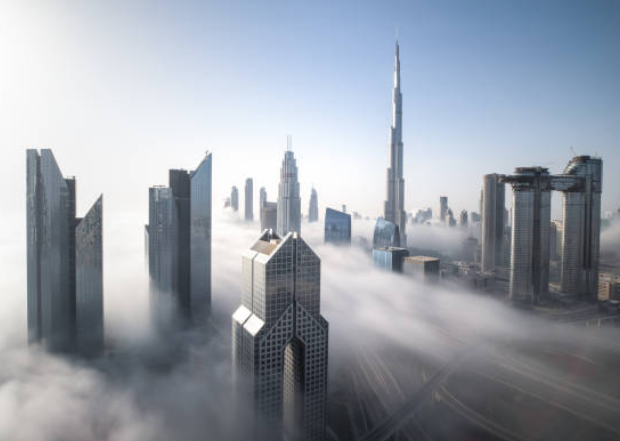
Engineering Innovations that Shaped World Major Skyscrapers
Engineering designs seeks to provide solutions that advance society and make enterprises more profitable while factoring public safety, convenience and comfortability. Therefore, architectural engineering advances real estate by coming up with designs that make land and spaces more profitable while ensuring safety, convenience and comfortability to users. In strive to achieve attractive and profitable investments in real estate, challenges have been encountered and conquered through innovative engineering approaches. Solutions have been developed progressively throughout history leading to emergence of innovative designs for new structures that have shaped world’s major cities skyline. This article therefore, outlines solutions that have been developed to shape real estate and construction sector through lenses of the following buildings: Taipei 101 in Taiwan; Harpa Concert Hall in Iceland; Burj Khalifa in UAE and Seattle Public Library in USA. The article highlights major challenges that have been conquered and forever shaped the industry.
The Elevator Technology
The invention of the elevator and the progressive improvement to their safety and speed made upper floors attractive as the obstacle of going up stairs was eliminated. Floors on top could attract higher returns due to higher demand. The discovery of elevators completely reversed the economics of real estate.
Taipei 101 uses world top speed elevators. The designers came up with a braking pad system made of ceramic. Ceramic pads are good heat resistors as they dissipate heat faster hence eliminating ignition possibility. Therefore, ceramic pads for breaking elevator was essential for top speed. Ceramic brake pads were previously used in motor industry but were introduced into construction industry by Taipei 101 designers.
The Construction Material
Construction materials were reinvented to deal with weight, reduce space taken by material used to construct and withstand threats of nature. Stones were used for construction but limited the height of skyscrapers to only a few meters. They were also heavy and occupied a larger space. Therefore, the reinvention of steel meant thinner and lighter but stronger support to the buildings. Walls did no longer need to bear their own weight hence architects had more options for curtain walls materials such as glass which became very popular with skyscrapers and improved aesthetic value of structures.Concrete technology was also invented and a combination of concrete's compressive strength and steel's tensile strength advantage made construction even better.
The need to pump concrete to new heights also required a reinvention as well. The solution was found in combined solution to improvement of both pumping technology and the concrete chemistry. Very powerful pumps needed to be developed using the pressure difference science to enable concrete be pumped to greater vertical heights. On the other hand, concrete chemistry required to be improved to enhance ease of pumping and modify concrete setting properties. A concrete product that is light enough to be pumped easily and thick enough to harden faster, two contradictory requirements that were met through proper additives innovations.
Before construction of Taipei 101, concrete had never been pumped to such high heights. Therefore, by such achievement, a bar was set higher with a motivation to break the barrier further. Burj Khalifa, the epitome of success in the sector attained the best innovation in additives technology adding 25 new additives solutions to ensure cement remained light while being pumped and setts fast enough after pouring. A combination of three best pumps in the world with magnificent power were used in its construction as well.
The Structural Elements Arrangement
Although, construction materials have been improved, an innovative arrangement of structural elements was essential to ensure buildings could carry their own weight and also withstand natural forces. For example, the use of outrigger trusses in Taipei 101 supported a number of design solutions. Firstly, the design allowed for provision of a strong rigid central system, a necessity in design for structures in typhoon prone regions. Secondly, the design enabled provision of flexible external columns a necessity in design for structures within earthquake prone regions. The two requirements are contradictory and had never been achieved in such magnitude before because no any other such tall building had been built in a both typhoon and seismic prone area. The outrigger trusses provided for transfer of loads from outer to inner core, harnessed the bamboo model of strengthening the stem, enabled design of a lighter building and enhanced the lateral and overturning resistance of the building. Further, it made it possible to achieve wide glass expanses desired by the developers which has made the building constantly hold the Leed certification as the greenest building in the world due to the energy efficiency created. Finally, their use enabled a wider floor space especially outside the central core which meant a higher income per floor
Worthy to note, although the skyscrapers are generally designed in form of rectangular blocks with glass facades, the designers of Taipei 101 challenged this hypothesis. Such designs produce both practical and aesthetically pleasing high-rise architecture but somewhat monotonous. The contemporary architecture is using ingenious designs to face this monotony. Taipei 101 has tapering base topped by a series of flared segments, a profile unlike that of previous skyscrapers hence, representing the culture and ideals of the Taiwan people. Therefore, it was clear that a skyscraper does not necessarily have to be rectangular all through or continuously tapering as monotonously portrayed.
The Seattle library building has unusual shape and a striking appearance. The unique building architecture is as a results of innovative arrangement of structural members in a manner that produce a strong support yet a flexible building with a unique shape. Therefore, through the unusual shape of the Seattle Public library design, a precedence was set, catalyzing the birth of ingenious building shapes that represents nature, functionality and aspirations of the society.
The Solutions to Natural Forces
The main natural forces that have been a constant a threat to the industry include; heat, wind and earthquakes. The challenges posed by these three forces of nature in skyscrapers have primarily been overcame and the ‘skies’ are no longer the limit.
1. Dealing with heat challenge
Glass was commonly preferred as curtain wall for building due to the lighting, aesthetic and general building weight reduction purposes. However, they posed comfortability challenge in the sense of turning buildings into an oven due to solar radiation. The invention of air condition machines and systems was the solution to the challenge and meant buildings could have enormous floor spaces because people would no longer need to be close windows to remain comfortable.
Burj Khalifa is built in extreme desert environment where the average humidity is 90% and temperatures easily reach 40o C in a shade. To supplement the artificial air condition systems, the designers of the building had to come up with ways to shield the building from brutal desert sun. The designers improved the surfaces of glass to reflect both the ultraviolet rays and infrared rays from the sun. The inner side was coated with a thin layer of titanium just like sun screen to deflect the ultraviolet radiation that would otherwise heat up the building. On the other hand, the inner side was coated with a thin layer of silver that deflects infrared radiation keeping heat rays out.
2. Dealing with wind challenge
The catastrophic threats posed by wind in form of hurricanes, typhoons, tornados and vortex shedding remained a concern not only to skyscrapers but to every building. The need to find a solution to this threat was not only due to the ever-increasing desire to build higher but due to the unpredictable challenge they pose today as well. The solutions to the wind challenge have been progressive with innovative solutions found in structural systems such as extra skeleton, bundled tubes that was first used in Sears towers, the tuned mass dumpers and now the aerodynamic solutions obtained by innovative shapes and corner modifications
Steel skeleton although initially hypothetically considered the solution to break building heights limits, wind still posed new challenges as the skyscrapers grew taller. Steel was susceptible to bending the taller they become because wind speed increased with heights. Therefore, increase in height of buildings was threatened by strong wind forces but a number of innovation provided a breakthrough.
The use of saw tooth corners in Taipei 101 provided 25% reduction of base movement and up to 40% top movement reduction compared to square section design. The reduction in movement was due to reduced effect of vortex shedding caused by wind. Therefore, corner modification has become a standard geometrical design consideration in high-rise buildings.
The use of tuned mass dumpers had been used previously in the construction industry but Taipei 101 TMD was bigger, different shape as well as installed at never before high point. The tuned mass dumper was used to counter the oscillating effects resulting from vortex shedding hence improving comfortability of the building. The Taipei 101 TMD design could be adopted for application in such tall buildings built in a similar environment where the typhoons are common and potentially prone to earthquake.
Burj Khalifa is designed with unpredictable shape such that it is neither flat nor rectangular. The design ensures each section of the tower deflects wind in a different direction hence disrupting vortices and in turn neutralizing wind power from oscillating the building. Burj Khalifa is also designed with a rigid skeleton and Taipei 101 has a rigid central core support column. The purpose of the rigidity was to neutralize bending power of wind to these extremely tall buildings.
3. Dealing with Earthquakes
Earthquake waves can easily bring down a building. Therefore, to develop a landmark skyscraper that matches current trend, a solution had to be found especially for constructions in high seismic active areas. The solution to the seismic waves is found using ductile materials to ensure a building is flexible such that it moves with the waves rather than against them.
Taipei 101 designers came up with the best design in the history of construction industry to address the challenges posed by the seismic waves. The building was built in one of the world’s worst seismic and typhoon active zone. The designers had to come up with a solution that addresses the contradictory requirements for the design of earthquakes and wind at the same time. The designers ensured the building remained both flexible and rigid at the same time through a combination of engineering solutions from selection of structural system to construction material.
The Construction Speed
The reinvention to improve on speed of construction was necessary to save both cost and time of construction considering building were becoming bigger. The solution to improve the completion time of huge construction was found in a combination of both pre-fabrication technology and crane technology to lift the pre-fabricated sections. Pre-fabricated section could easily and at a much faster speed be transported to construction site and lifted with the now jumping kangaroo cranes to hypothetically any height.
Construction of Burj Khalifa came up with the jump forming technology that improved further the speed brought about by previous pre-fabrication and jumping crane technologies. Steel for reinforcement were assembled into sections like cages at the bottom of the building and lifted by the Kangaroo cranes to the top and slotted into special moulds called Jump folds. Concrete was then pumped and after 12 hours of concrete setting the forms using the hydraulic piston systems jumped to the next level within two hours and the process could start all over again.
The Solutions to Harsh Foundations
Construction of Burj Khalifa provided some of the most spectacular excavations and foundation solutions in the construction industry. The first was the use of viscous polymers slurry to ensure sand did not cave in during excavation for piles. The second was the use of frictional force to hold the weight of the building. Traditionally, engineering analysis of foundation bearing material was based on its bearing capacities and consolidation properties. However, the incredible idea of using frictional force of material to bear the weight had not been thought about. Burj Khalifa entire weight is carried by the frictional force between piles and the desert sand. Secondly, the ground under Burj Khalifa is saturated by water and the rock is very fragile such that any big borehole excavated imminently faces collapsing challenges. Engineers came up with an innovative method by using viscous polymers slurry to displace water and pushing the rock fragment at the edge to ensure they remain firm. Polymers slurry was then displaced by concrete hence completing the process of pile construction.
The Power of Collaboration with Other Professionals
Construction industry especially the building sector has traditionally been spearheaded by Architects and Structural Engineers. However, due to the changing global trends and demands, the industry has embraced expertise from other professionals such as social workers, environmentalist, and artists among others. The inclusion of inputs and expertise contribution from these professionals has resulted to better buildings in terms of aesthetics, environmental hazards mitigation, security and response to nature.
For instance, the design of Harpa Concert Hall in Iceland incorporated input from an artist. The resulting combined expertise of architects, engineers and artists was a building that created a place that triggers emotions, boosts city life, as well as generates a sense of agency, pride and community. The collaboration between the three made it possible to come up with an ingenious building that has won countless architecture and design award such as the internationally respected European Union’s Mies van der Rohe award for contemporary architecture. The Harpa building has become an example of harbor front development.
Use of transparent materials in the Harpa Concert Hall facades enable observation of activities from the outside hence inviting and attracting people from the city. Further, the southern side of the building is constructed with a double skin façade to enable absorption of surplus heat. The façade used in the building generally challenged the common understanding of buildings as static objects. The design of the façade enabled the building respond dynamically to the surroundings. This was achieved by use of a dichroic glass which makes the color to dynamically change with lighting conditions or different perspectives hence representing the true nature of Iceland
On the other hand, Burj Khalifa took the innovation for reducing vortex shedding to all knew level by utilizing the expertise of a Winds Engineer to play around with aerodynamics of wind using the shape of the building. The result was purely use shape modification and modeling produced a shape that reduced the movement of the building completely despite the high wind speed at the top and powerful vortex shedding forces.
The Solutions to the Current Terrorism Threat
The greatest threat to the existence of the now magnificent buildings is terrorism attacks. Although it is difficult to design a building that is terrorism proof, it is possible to come up with ingenious technology and innovative solutions that can alleviate or mitigate the impact when such events occur.
Burj Khalifa design for instance incorporated refuge rooms that can hold people for two hours in case of fire for evacuation purposes. The refuge rooms were built from reinforced concrete walls and fire proof sheeting to withstand heat for two hours. Each of the room was supplied with air by fireproof pipes and doors are also both fireproof and could prevent smoke from leaking in. Further, the building was designed to include early warning systems with electronic sensors that senses fire, smoke or water and activates the fans in the fireproof pipes to pull fresh air into the building and push out the smoke hence ensuring the paths to the access of refuge rooms are clear.
What Next Big Thing in the AEC Industry?
Artificial intelligence, Software including Building Information Modeling (BIM) together with Robots will shape the construction industry and lower the cost of construction especially in the housing sector, in the sense that AI will design, software will manage and robot in form of 3D printing and others will construct. A combination of the three will make it possible to do a project to any remote area on earth surface with ease, Further, it will be possible to have projects on the moon and other planets especially planet mass
About the Author
The Author is a Licensed Professional Engineer and a Certified Project Management Professional with extensive experience in AEC industry. He holds a Bachelor of Science in Civil Engineering from Kenyatta University, Kenya.